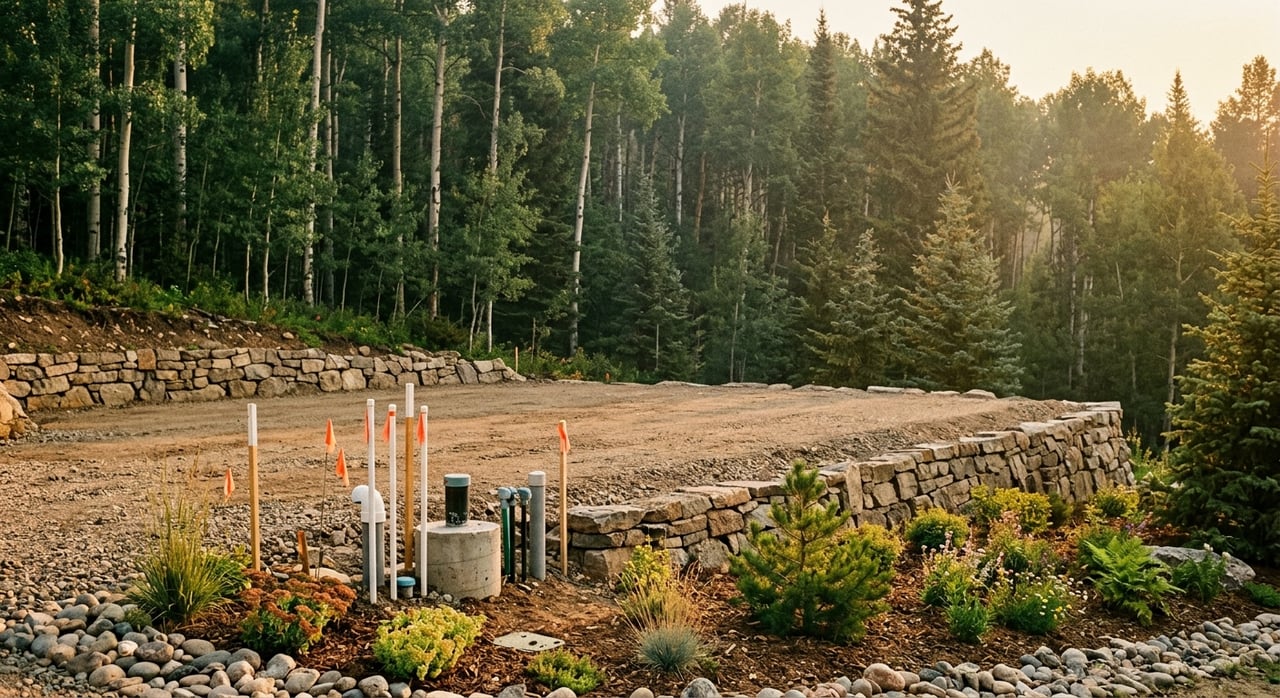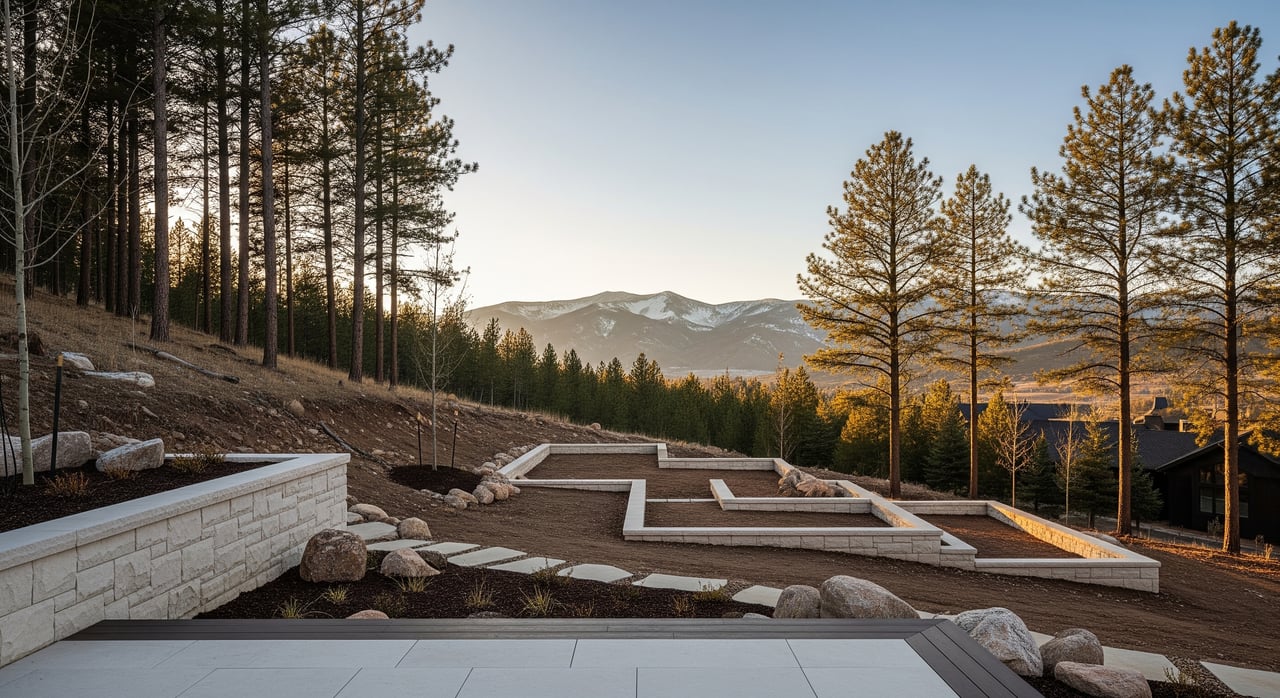
Drive Kearns Boulevard this month and you will pass a fenced, half-graded lot where Treasure Mountain Junior High stood for forty-three years. The school came down last fall. What replaces it, a complex of soccer fields, tennis courts, and ballfields, is still under construction, and as of early August 2026 the Utah Department of Environmental Quality is still investigating how the school district handled contaminated soil and groundwater discharged from that site. The district says it has now removed all soil that tested as hazardous waste, but the state investigation remains open.
That half-acre matters more to Park Meadows real estate than most listing sheets admit. For years, the neighborhood's price premium has rested on proximity to three schools: McPolin Elementary, Treasure Mountain Junior High, and Park City High School. Two of those three, McPolin and the high school, still sit on the same Kearns Boulevard campus. The third is now a construction site with an open state file, its students redistributed to Ecker Hill Middle School and the high school for the 2025-2026 school year.
In most neighborhoods this would be a footnote. In Park Meadows, it is worth understanding, because Park Meadows has spent the past two years pricing as if it has something to prove.
The Comp That Should Not Work
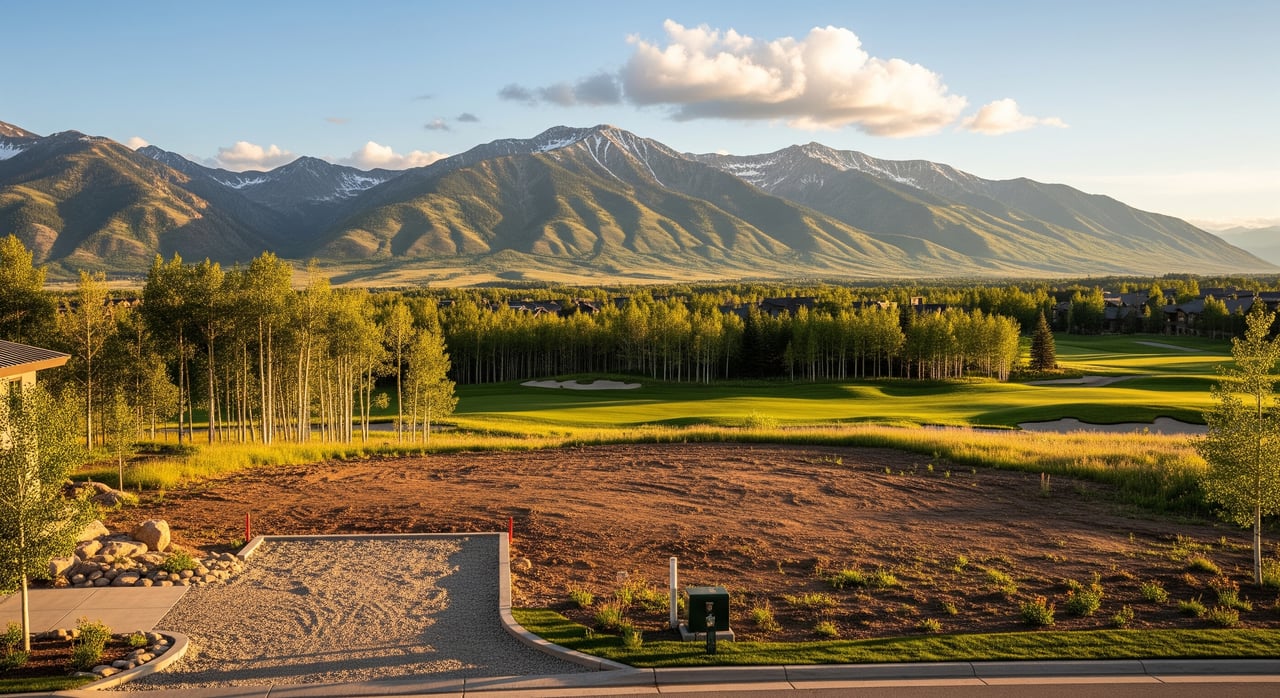
Park Meadows has no ski-in access. No gondola, no chairlift within walking distance, no resort base village. What it has is a five to ten minute drive to Park City Mountain, Deer Valley, and Canyons Village, plus flat streets in a town built almost entirely on grade.
By the plain logic of Park City pricing, that should put Park Meadows well below Old Town, which trades on Main Street walkability and ski-adjacent scarcity. It does not. In 2025, Old Town logged 53 single-family sales at a median of $3.4 million. Park Meadows logged 35 at a median of $3.395 million. Two neighborhoods with almost nothing in common on paper landed within five thousand dollars of each other.
The broader market context makes this harder to write off as noise. A new Park City Board of Realtors report covered by KPCW this week put trailing Wasatch Back sales volume at more than $5.7 billion, up from $5.2 billion over the comparable period a year earlier, a 9 percent price gain on an essentially flat transaction count. Single-family homes across Park City and the Snyderville Basin posted a first-half 2026 median sale price of $3.16 million at a median $788 per square foot and a 97.4 percent sale-to-list ratio, figures drawn from Park City Board of Realtors and Domus Analytics data. Park Meadows sat inside that healthy first half, and by the second quarter it was turning in one of its strongest stretches in recent memory. Old Town's median did not hold steady because ski access got more valuable. Park Meadows' median did not climb because it suddenly grew a chairlift. Something else is doing the work.
Three Things Standing In For a Ski Lift
Buyers who choose Park Meadows are not choosing worse access to the mountain. They are choosing a different bundle of value entirely, and it holds up on its own terms.
- Flat, usable ground. Park City's terrain punishes builders and buyers alike with grade. A 0.30-acre flat, fenced yard in Park Meadows functions completely differently from a similarly sized parcel on a slope elsewhere in town, and usable square footage, not just lot size on paper, is what carries resale value here.
- An optional club, not a mandatory one. Park Meadows Country Club, home to Park City's only in-town private golf and social course, was designed by Jack Nicklaus in 1983 and has hosted ten PGA Tour Champions events since. You can join it, and many owners do, but membership is not a condition of buying in the neighborhood. Residents who want pools, tennis, and fitness without a club fee can use the Park City Municipal Athletic and Recreation Center instead. That is a meaningfully different cost structure than Tuhaye, where Talisker Club membership is effectively baked into ownership.
- School proximity, for now. McPolin Elementary and Park City High School still anchor the west end of the neighborhood. Treasure Mountain Junior High anchored the middle of that chain until last September.
None of these three replace a ski lift on a spreadsheet. Together, they explain why buyers keep paying Old Town money for a neighborhood that requires a car.
Not Every Street In Park Meadows Is the Same Trade
The neighborhood median hides as much as it reveals. Park Meadows spans more than a dozen distinct sub-areas, and lot position decides which side of that median a given property lands on.
| Sub-area | What it typically offers | Where the value concentrates |
|---|---|---|
| Eagle Pointe | Custom estate lots from 0.5 to over 3 acres | Elevated, resort-facing view corridor |
| Ridgeview, West Ridge, Risner Ridge | Hillside and cul-de-sac positions | Panoramic Park City and Deer Valley sightlines |
| Fairway Hills Estates | Golf frontage and adjacency | Direct fairway or green frontage over proximity |
| Holiday Ranch Estates | One to two-plus acre parcels, horse zoning, irrigation rights | Acreage and equestrian use rather than views |
A home a street back from the fairway in Fairway Hills does not resell like one that fronts it. A lower or interior lot in Ridgeview can carry a pleasant outlook without the resort-facing exposure that drives the strongest demand. Buyers comparing two Park Meadows listings at the same price point are often comparing two different products wearing the same neighborhood name.
The Renovation Math Nobody Puts On the Sign
Park Meadows is not new construction stock. Roughly 79 percent of homes in the neighborhood were built before 2000, which means condition, not just location, is doing a large share of the pricing work.
Properties marketed as original condition or priced for improvement sell here regularly. Fully updated homes with new mechanical systems and functional floor plans consistently outperform dated inventory in both days on market and price per square foot. A buyer evaluating two homes at the same asking price in the same sub-area is often really choosing between a finished product and a renovation project wearing the same square footage on paper.
Park Meadows was never selling ski access. It was selling flat ground, an optional club, and three neighborhood schools. As of this year, one of those three schools is a construction site under state review.
What the Investigation Actually Means for a Buyer
Here is what the record shows, without speculation. Testing at the former junior high site found lead concentrations as high as 7,330 milligrams per kilogram, more than 36 times the limit set under the property's 2016 environmental covenant, and arsenic as high as 300 milligrams per kilogram, roughly 100 times the relevant screening level, according to reporting from TownLift. The district says it has since removed the soil that tested as hazardous waste. A Utah Division of Environmental Quality official told the Park Record that elevated arsenic and lead are not unusual in a historic mining town and that perimeter air monitoring has consistently shown levels below OSHA exposure limits. The district's own FAQ page confirms it has not received any fines or penalties to date.
None of that settles the question of what a finished Treasure Mountain Sports Complex, funded through a $38 million bond, will mean for daily life two streets over. It does mean a buyer touring Park Meadows homes near Kearns Boulevard this fall has a legitimate, specific due diligence question that did not exist two years ago: ask for the current status of the DEQ investigation and the construction timeline before treating school proximity as a settled amenity.
Reading a Park Meadows Listing Right Now
Three things to check before comparing price per square foot across listings:
- Lot orientation. Ask whether the view corridor is resort-facing or interior. The difference shows up in resale, not just in the listing photos.
- Renovation vintage. With most of the housing stock predating 2000, ask what has actually been replaced versus refreshed.
- Club status. Confirm whether a Park Meadows Country Club membership is included, available, or irrelevant to the property, since it is optional, not automatic.
FAQ
Is Park Meadows Country Club membership required to buy a home in the neighborhood? No. The club offers full golf, social, and other membership tiers, but residency does not require joining. Owners can also use the Park City Municipal Athletic and Recreation Center for pools and fitness without a club fee.
Does the Treasure Mountain construction affect current home values in Park Meadows? The record shows an active state investigation into soil and groundwater handling at the site, with hazardous soil now removed and no fines issued to date. The practical effect on any specific property depends on proximity and timeline, which is worth discussing directly rather than assuming either way.
Why did Park Meadows and Old Town post nearly identical medians in 2025 despite such different property types? Old Town sells scarcity and walkability to Main Street. Park Meadows sells flat, usable land, an optional country club, and school proximity. Different inputs, similar output, at least until one of those inputs changes.
If you are weighing a Park Meadows purchase against Old Town, Promontory, or another Park City neighborhood, the median alone will not tell you which lot, which school proximity, and which renovation status you are actually buying. Tricia Cohen works these comparisons street by street. Schedule a private consultation to look at the specific Park Meadows sub-area and property that fits what you are actually trying to buy.
This article is general information, not legal, tax or financial advice. Consult a qualified professional about your situation.