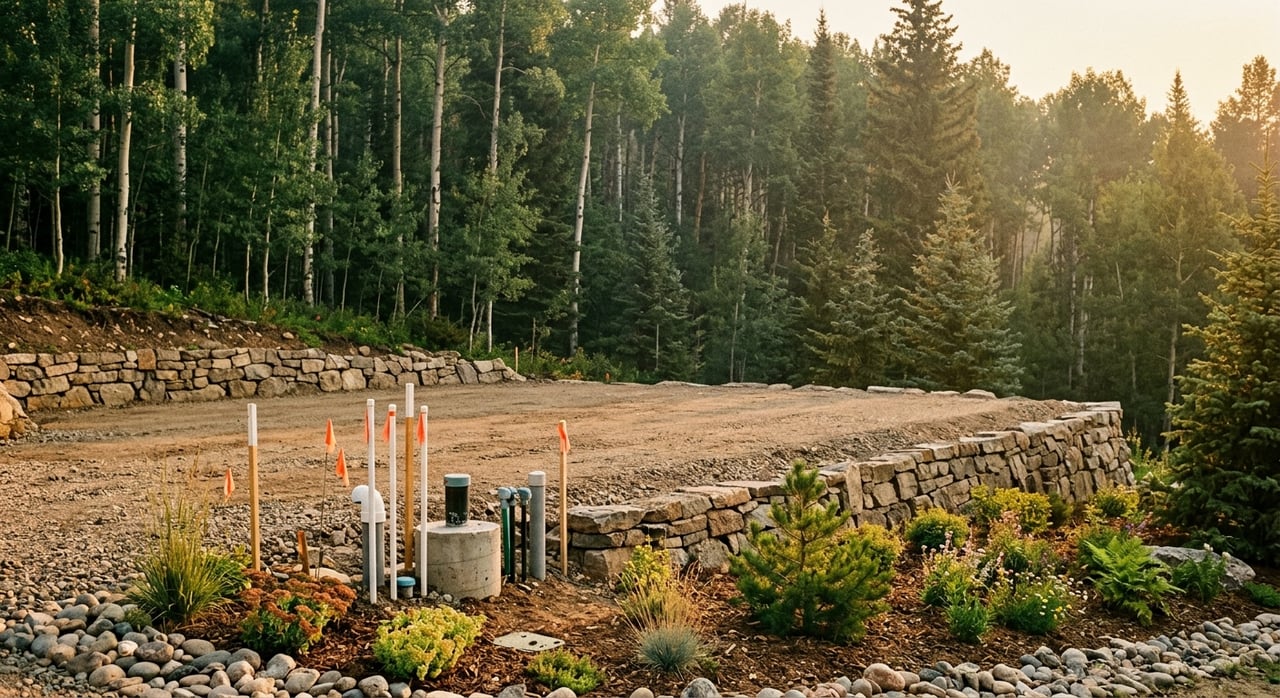
Thinking about buying your homesite in The Colony first and building later? You are not alone. Many Park City buyers want the right lot now, then a measured path to design and construction. In this guide, you will learn how lot loans work, how lenders underwrite custom projects in Summit County, how your lot equity carries into a construction loan, and the steps to take before you start design. Let’s dive in.
Why buy the lot first
Finding the right setting is often the hardest part of a custom build. By securing a homesite first, you give yourself time to plan the architecture, assemble your team, and confirm approvals without rushing. In a branded community like The Colony, the ARC process, CC&Rs, and utility agreements are central to feasibility and financing, so early control of the lot helps you shape a realistic path to permits.
Lot loan basics in Park City
Lot or land loans finance the homesite only, not construction. Lenders price these as higher risk than traditional mortgages, so expect higher rates and larger down payments. For improved lots in recorded subdivisions with utilities and road access, typical down payment ranges often land between 20 and 30 percent. For raw or more challenging land, down payment can run 40 to 50 percent or more.
Many lot loans have shorter terms, commonly 5 to 15 years. Some are interest only, while others amortize. Since terms vary, start lender conversations before you write an offer on a lot in The Colony.
Construction loans at a glance
When you are ready to build, you will likely use a construction loan. You can choose:
- Construction to permanent: One closing that funds construction draws and then converts to a permanent mortgage at completion. Lenders require full plans, a fixed price builder contract, a schedule of values, and an approved, experienced builder.
- Stand-alone construction: A construction loan during the build, then a separate mortgage refinance at completion.
In luxury markets like Park City, many buyers use jumbo or portfolio construction products. Portfolio lenders hold loans on their books and can be more flexible on custom features, but often at a higher cost.
How lenders underwrite in The Colony
Valuation and appraisal
For construction loans, lenders consider the completed or after-improved value, based on your plans and cost breakdown. They lend up to a percentage of the lesser of total cost or the appraised finished value. Appraisers will study comparable lot sales and custom home sales in The Colony and similar high-end areas. In a luxury, low-transaction market, comps can be limited, so appraisals can be more subjective.
Site and feasibility factors
Lenders closely review your lot’s specifics because these drive cost and risk:
- Utilities: Culinary water, sewer or septic, power, and gas availability. Proven utility connections or firm agreements are viewed favorably.
- Access and roads: Whether roads are public or private and who maintains them. Seasonal access can affect underwriting and insurance.
- Geotechnical and topography: Steep slopes, rock, retaining walls, and special foundations increase cost and will require a geotechnical report.
- Constraints: Drainage, wetlands, easements, and buildable area limitations must be documented.
- Fire risk: Wildfire exposure and defensible space requirements can affect insurance and underwriting.
Community approvals
Most lenders want evidence that your plans comply with community CC&Rs and are progressing through The Colony’s ARC. Some will close with conditional approvals, but many prefer stronger ARC sign-offs before construction close. Permitting timelines with Summit County or Park City also factor into closing and draw schedules.
HOA fees and assessments
Carrying costs matter. Lenders evaluate HOA dues and any planned or outstanding special assessments as part of your overall debt and cash flow.
How much equity you will need
Lot purchase
For a lot-only purchase, plan for a down payment in the 20 to 50 percent range, depending on whether the lot is improved and on your credit profile. More remote or complex sites can require even higher equity.
Construction phase
For construction loans, lenders typically want combined borrower equity of about 20 to 30 percent of the completed value in standard cases. In a luxury, custom environment like The Colony, requirements often increase to 25 to 40 percent, especially if comparable sales are limited or if the site presents added complexity.
How lot equity counts
When you move from a lot loan to construction financing, the lot is usually rolled into the construction loan. Your lot value generally counts as equity. Lenders often value the lot at the purchase price or current appraised value, subject to appraisal and lender policy.
Acceptable equity sources
- Cash and liquid assets
- Proceeds from the sale of another property
- Home equity line of credit on an existing home
- Gift funds that meet lender documentation rules
- Seller or developer financing, if allowed and documented to lender standards
Plan for a contingency in your construction budget, typically 5 to 15 percent. You should also be ready to cover cost overruns with additional cash or approved backup financing.
Stage your financing: a practical timeline
Before you write an offer
- Speak with lenders about lot and construction products, likely LTV for improved lots in Park City, and whether they actively finance projects in The Colony.
- Get prequalified for both lot-only and lot plus construction scenarios.
- Engage a local real estate adviser and a lender experienced in Summit County luxury construction.
During due diligence
- Order a current title report and confirm easements, restrictions, and any liens.
- Obtain a site boundary and topographic survey.
- Commission a geotechnical report to flag foundation or slope issues early.
- Verify utility availability and hookup or capacity fees with the appropriate provider.
- Initiate ARC concept and preliminary review to understand standards, costs, and timelines.
- Seek an appraisal or informed opinion of value for both the lot and projected completed home.
Early design
- Hire an architect and builder with local experience. Lenders will require a licensed, proven builder and a fixed price contract for construction close.
- Produce a realistic budget with soft costs and contingency: permits, utility connections, impact fees, landscaping, site work, and professional fees.
- Decide whether you will close a construction to permanent loan or plan to refinance a lot loan into construction once plans are complete.
Close and build
- Construction loans fund in draws tied to completion milestones with inspections.
- You generally pay interest only on the funded amount during construction.
- Monitor the budget. Major change orders need lender approval and may require additional funds from you.
Completion and long-term financing
- After final inspections and a certificate of occupancy, your loan converts per its terms or you refinance into a permanent mortgage.
Costs beyond land and build
Set your budget to include more than the structure and the lot. Line items that often surprise buyers include:
- Impact and connection fees for water, sewer, power, and gas
- Private road improvements or assessments for maintenance
- Soft costs: permits, architectural and engineering fees, surveys, and geotechnical work
- Insurance: builder’s risk and higher hazard premiums in mountain environments
- Property taxes, HOA dues, and possible initiation fees
- Lender holdbacks or reserves for contingency
Choose the right lending fit
In Park City’s luxury segment, jumbo and portfolio lenders are common. These lenders may offer construction products that better match high-end, custom projects. Some communities or developers offer seller or preferred financing for lots, or they have relationships with construction lenders. Availability changes over time, so confirm current options directly with The Colony and with local lenders.
Avoid common delays
- Incomplete ARC and permit planning: Align design with CC&Rs early and track approvals.
- Missing site data: Get surveys and geotechnical reports during due diligence.
- Utility surprises: Confirm availability and fees before you finalize your budget.
- Builder acceptance: Choose a licensed builder with relevant experience and documentation.
- Thin contingency: Carry 10 to 20 percent overall cushion for soft and hard costs.
Your next steps
- Start a conversation with a lender who actively finances custom builds in Summit County.
- Select a local agent with land-to-build expertise in The Colony to help target financeable lots.
- Run a realistic pro forma that includes soft costs, connection fees, and a contingency.
- Engage an architect and builder early so you can move to a fixed price contract when you are ready.
When you are ready to map your lot-to-build plan, we are here to help you structure the financing path and assemble the right team. Schedule a Private Consultation with Unknown Company to discuss your timeline, budget, and lending options.
FAQs
Can I use a conventional mortgage to buy an unimproved lot in The Colony?
- Generally no. Traditional mortgages finance homes, not raw land. A lot loan or a construction-focused product is the standard path.
How much down payment do I need for a lot-only purchase in Park City?
- Expect 20 to 50 percent down, with improved lots often at the lower end and raw or complex sites at the higher end.
Will my lot equity count toward my construction loan in The Colony?
- Yes, in many cases lenders credit lot value as equity, often using your purchase price or a current appraisal, subject to underwriting.
Do I need ARC approvals before closing a construction loan?
- Lenders typically require proof that your plans comply with CC&Rs and have a clear path to permits. Some accept conditional approvals, while many want stronger ARC sign-offs.
What extra costs should I plan for beyond the build itself?
- Include utility connection and impact fees, road or HOA assessments, soft costs for design and permits, builder’s risk and hazard insurance, taxes, and lender reserves.
How critical is the builder’s experience to my financing?
- Very. Lenders expect a licensed, proven builder, a fixed price contract, and a detailed schedule of values before construction close.